Cannabis Terpenes: Aroma, Effects and the Limits of the Evidence
Updated October 3, 2026. Revised with human terpene studies and newer aroma research. Earlier claims that individual terpenes reliably deliver particular benefits have been removed.
Terpenes are useful details about cannabis, especially when you want to describe what you smell and remember products you enjoyed. But a terpene chart is not an effects calculator. “Limonene means happy” and “myrcene means sleepy” ask a single ingredient to predict far more than the evidence supports.
Aroma is bigger than a terpene panel
Terpenes contribute to aroma, but they are not its only ingredients. A 2023 chemical study of 31 cannabis extractsidentified nonterpenoid compounds associated with distinctive tropical, citrus, and savory notes. Follow-up research in 2024 linked minor volatile compounds with differences in aroma among cannabis phenotypes.
This helps explain why two products with similar major-terpene results can smell different. It also means you cannot reliably identify a complete chemical profile by nose. “Citrus” is a sensory description, not a laboratory measurement of limonene.
Use familiar scent words without turning them into prescriptions
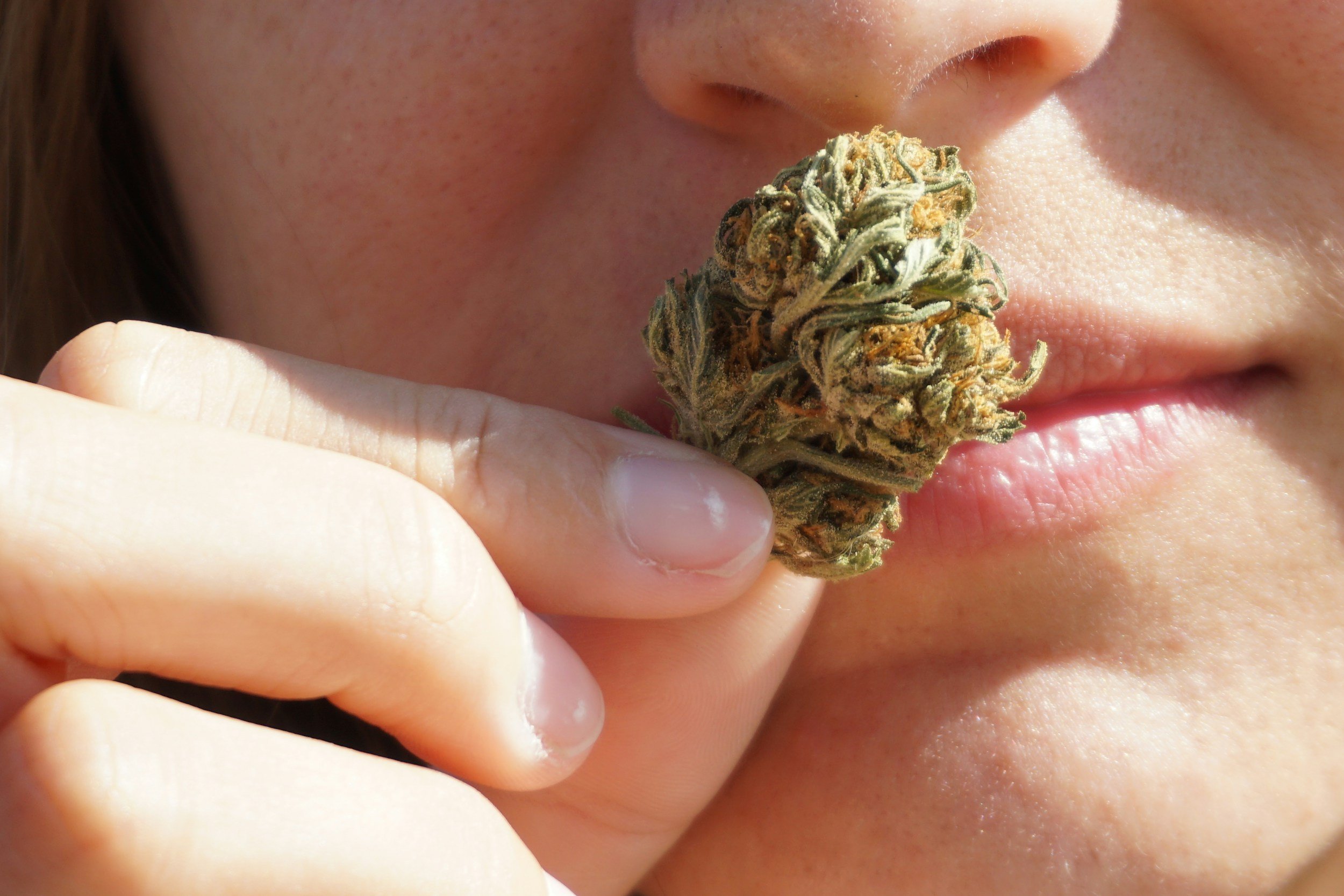
Pine, citrus, floral, peppery, earthy, and woody can be helpful vocabulary. Start with what you actually notice rather than what a strain description says you should notice. You may perceive several notes together, and your description may differ from someone else's.
Keep three things separate in your journal: the aroma you perceived, the compounds a lab reported, and the effects you experienced. Finding all three in one entry does not establish which ingredient caused the experience.
What the human studies show
A 2024 experiment with vaporized d-limonene and THC reported reduced THC-related anxiety under some tested conditions. It was a small controlled study of isolated compounds, not a trial showing that citrus-smelling flower treats anxiety. Its highest combination involved only a subset of participants.
A 2025 double-blind study of alpha-pinene and THC did not find the predicted protection against THC-related memory impairment. The contrast matters: a plausible mechanism, common claim, or animal finding is not enough to establish a practical human benefit.
These studies justify further research, not a universal recipe. Results depend on the compound, amount, route, outcome measured, and people studied. They do not show that adding any terpene makes THC safer or that every combination has a useful “entourage effect.”
What “entourage effect” can and cannot mean
The term is often used for the idea that cannabis compounds interact. An interaction could strengthen, weaken, or leave an effect unchanged; it is not necessarily beneficial. A claim that one terpene boosts THC or another reliably enhances CBD needs direct evidence for that combination and outcome.
Our earlier article overstated those claims. We no longer present terpenes as equal to cannabinoids in determining every experience, or assign individual terpenes established treatments for anxiety, inflammation, or pain.
Read the batch, not just the strain name
If terpene results are available, check that they match your batch and note the units and date. Do not assume a named cultivar always has the same dominant terpene. Drying, storage, formulation, and other product differences can matter, and a short panel is not a complete chemical inventory.
Research on drying and storage documents changes in volatile and cannabinoid composition. Keep package and storage notes when comparing a fresh product with one you have had for a while.
A practical way to use the information
Make a brief aroma note before reading promotional descriptions. Save any batch-specific terpene results separately. Record the amount and method used, your starting state, timing, and wanted or unwanted effects. When you review entries, ask whether a pattern repeats across comparable circumstances—and what else changed.
“I often enjoy this aroma” is a useful preference. “This terpene treats my condition” is a much stronger claim that your journal cannot establish. Green Journal can help preserve the distinction. For a broader look at labels and prediction, read Sativa vs. Indica vs. Hybrid: What the Science Says in 2026.
GREEN JOURNAL · THE APP
Your next favorite is worth remembering.
Keep your products, sessions, ratings and personal notes together. Spend less time trying to remember—and more time learning from your own history.
Download Green Journal for iPhone & iPad ↗
Free to download. Optional in-app purchases.